Monday, September 16, 2013

Merlin!

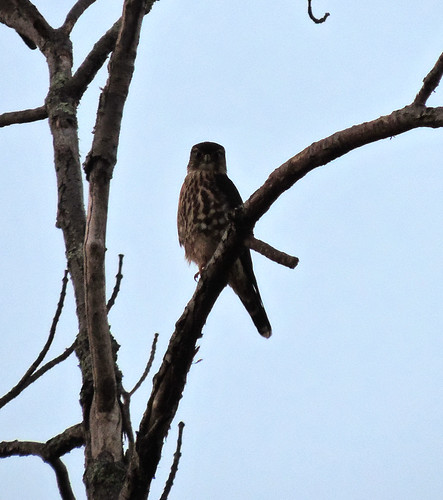
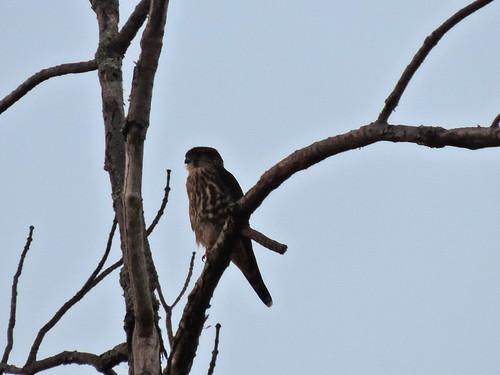
A Merlin has once again showed up this Sept. at East Fork.  Even in the same tree I seen one in last year.  Wonder if it is the same bird?

This bird was spotted just before it got too dark to see.  For birders that are local, the bird was seen on the south side of the park in the large dead tree between the old ranger station parking lot and the new ranger/watercraft building.  This is the tree at the 90° bend on Williamsburg-Bantam.


Merlin


Merlin

Here is a map:


https://mapsengine.google.com/map/edit?hl=en&mid=z1ftRxoyn0Wk.kdZbOzHe6UCk

Sunday, September 08, 2013

A strange TERN of events...

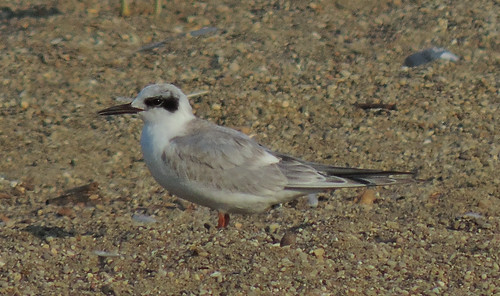
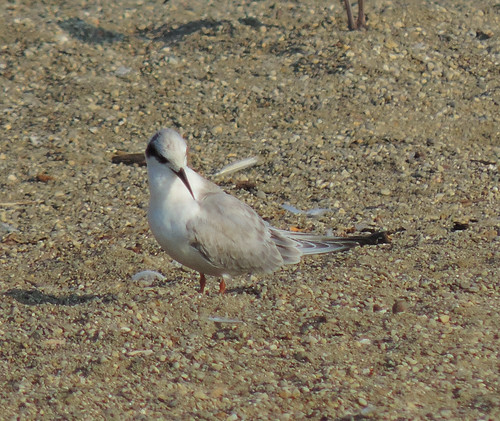
A Little Gull was reported by another birder yesterday morning at East Fork State Park Beach.  I had to work, so I couldn't get there until evening.  I did not find a Little Gull, but did find the winter plumage Forster's Tern that has been there since at least last Thursday.

This morning (Sunday), I was off work, so I arrived at about 9am at the beach at East Fork.  There were already about 5 or so birders with scopes looking at a bird.  I was hoping that it was a Little Gull, as I have only seen one and it was far away.  This bird was resting on the sand.  Since I have had my scope stolen, I had only binos and my camera.  A couple of birders asked if I would like to see the Little Gull, so I of course said yes.  The only thing is, the bird I was looking at was not a Little Gull.  In fact, it wasn't a gull at all.
They had a few field guides opened to Little Gull on an old water fountain.  I began to suggest other possibilities that the bird might be.  I turned the guide to terns and offered just a little of my opinions.  I was in the minority slightly at first.  I could tell that the birders that were convinced that it was indeed a Little Gull were getting a little uneasy and upset.  I then started to talk to the other birders that were there.  I recognized  one of the birders.  I began to discuss why I felt the bird was what it was and he began to see why I came to the conclusion that the bird was a Forster' Tern in winter plumage.  Another birder also agreed that it was indeed a Forster's Tern.  The couple that never would disclose their name to me left as the talk of the bird being a tern heated up.  Here is the bird that was causing all this confusion:


Forster's Tern


Forster's Tern

Forster's Tern


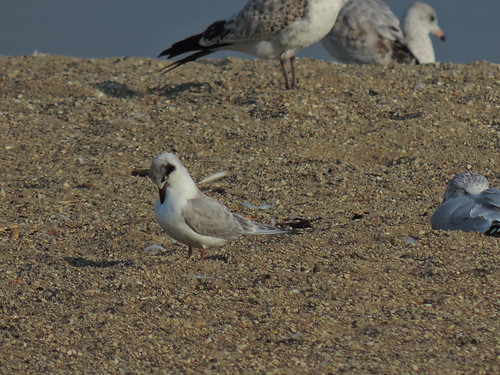
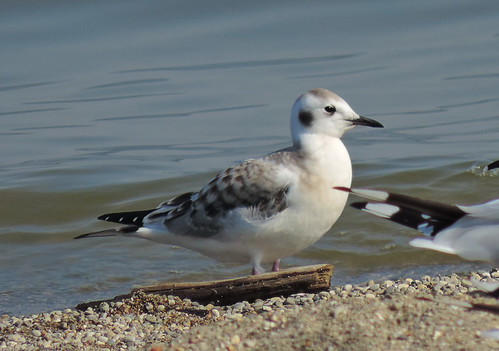
While I don't have a picture of a Little Gull, there was a Bonaparte's Gull nearby.  I told them that the Little Gull would be more similar to the Bonaparte's than to this bird.  This is the BONAPARTE'S that was nearby.

Bonaparte's Gull

There are some "Jizz" differences here.  I often suggest to people that they just zoom out or just observe the bird through their binos only for a while.  The couple that insisted that the bird was a Little Gull was so stuck on minor details that they did not look at the overall bird.  The tail I remember was a sticking point.  They did not see the streamers that the bird would have in breeding plumage.  This alone would not be enough to make it not a tern.  White feathers contain no melanin, so they are weak.  This means that the feathers most likely are worn down by now, giving the bird a short tailed look.  

I do not know if the bird above (tern) is the bird the original birder misIDed or not.  I do not recognize the name.  

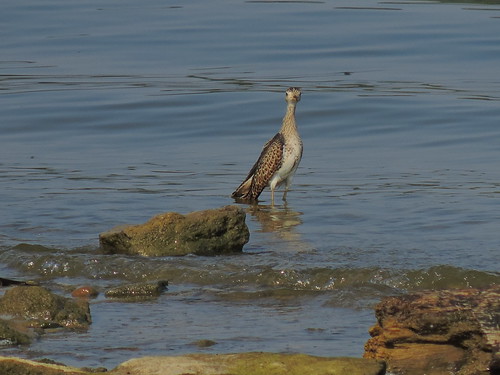
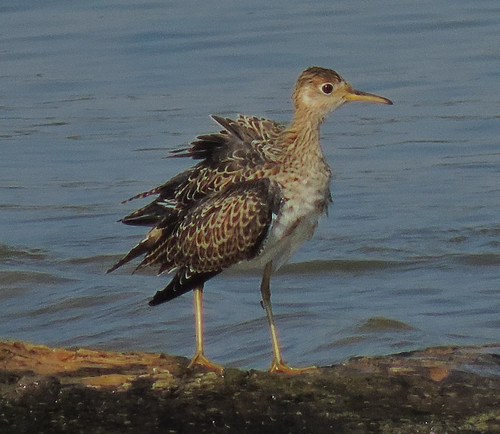
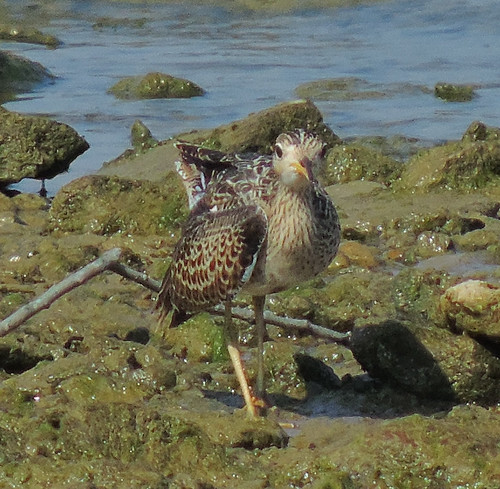
After everyone but me and one other birder left, things got real interesting.  I started just talking with the other birder when I noticed a long necked shorebird just beyond the gulls.  This little spot on the corner of the beach has been very productive in the past.  I told the other birder I was with that I think I see something of interest over there.  We decided to get a little closer and check it out.  I originally thought that the bird may be a Pectoral Sandpiper, but it just looked too big and long necked.  As we got closer, I said to him "that's an UPLAND SANDPIPER!"  That would be a life bird for me.  

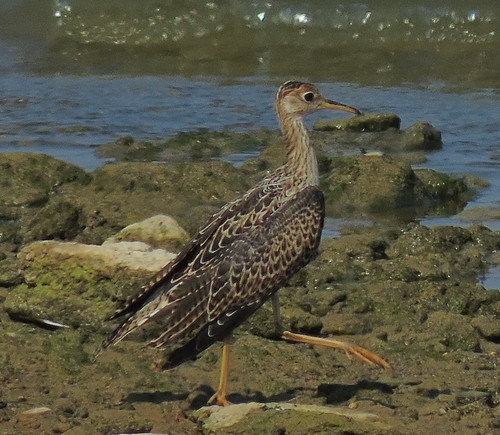
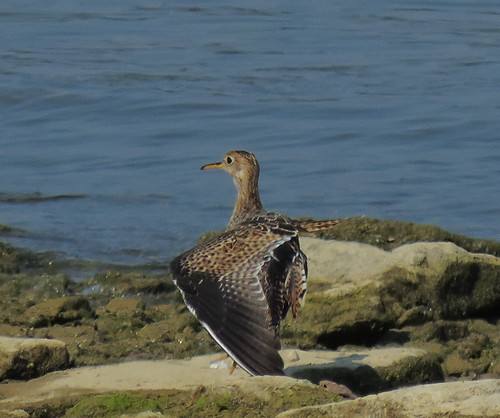
We quickly noted that the bird had an injured wing, as it was dragging it.  The bird attempted to swim away like a duck would swim, but turned around and went into the deep vegetation.  We were able to get a few photos of the bird.  Very sad to see such a nice looking bird in such situation.  Just hope it stays away from the off leash dogs.

Here are the photos that I was able to obtain.  The bird was kinda of skittish, so we kept our distance.  Being injured, I didn't want to stress the bird anymore than it already was. 

Upland Sandpiper

Upland Sandpiper

Upland Sandpiper

Upland Sandpiper

Upland Sandpiper

Upland Sandpiper

When I got home, I checked the Birding Ohio Facebook Group and found that the local Wild Birds Unlimited store had received a call about an injured Upland Sandpiper in Bethel, Ohio.  This is very close to where this bird is.  I talked to the staff person who took the call, a birder friend, who told me that the bird was found in a yard yesterday and that the bird was sent to rehabbers.  Whether this is a different bird or not I do not know.  For now, I can only assume that it is not the same bird.  The bird headed deep into the vegetation, and despite my looking for it, I could not re-find it.  

A very strange tern of events indeed...

Update: This evening (Sept. 13th), I was at East Fork and Ginny Fantetti and Rob Edelen showed up. I have known Ginny for a while and know that she is familiar with rehabbing and the methods used from her work with Raptor, Inc. She came up with a plan and we successfully executed it in short order and the bird was caught without incident. The bird appeared to have a broken wing. It is now in the process of being turned over to the rehabber.  

Update #2 from Ginny Fantetti: "The sandpiper was delivered to Back to the Wild rehabilitation center in Castalia, OH yesterday (an all-day road trip). They have the resources and facilities to get proper care for it and will be able to keep it as a permanent educational display bird if it can't be released. I'm glad it didn't come to an ugly end at the hands of one of the many off-leash dogs or stray cats at the beach at East Fork."

------
Glad the story came to a good ending.  Also glad it is over!

Thursday, August 22, 2013

Head west, my friend

My "fall" shorebirding season kicked off very well this year, with my spotting of four willet and a marbled godwit in July at the beach at East Fork State Park.  I thought that if I am seeing all this now, I can only imagine what the next couple of months will bring to the beach at East Fork.

Well, as of the writing of this post, not much has been happening shorebird wise at the beach.  There is very little shorebird habitat on the east side of Cincinnati, Ohio.  If a birder were to ask where to find good birds in SW Ohio, I would have to tell them to go west side.  The west side has been on fire!  They have had buff-breasted sandpipers, and even an upland sandpiper!  That would be a life bird for me.

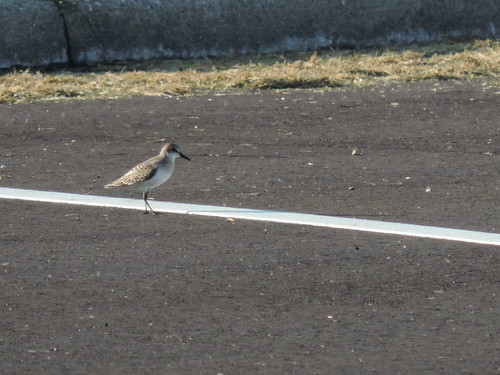
I am not joking when I say that the east side of Cincinnati is lacking in shorebird habitat.  While the west side has mudflats, the east side has asphalt flats aka parking lots.  This photo shows the typical Clermont County shorebird habitat.

Semipalmated Sandpiper

Most birders wouldn't expect to find a semipalmated sandpiper in a parking lot, but in Clermont County, what can you say?

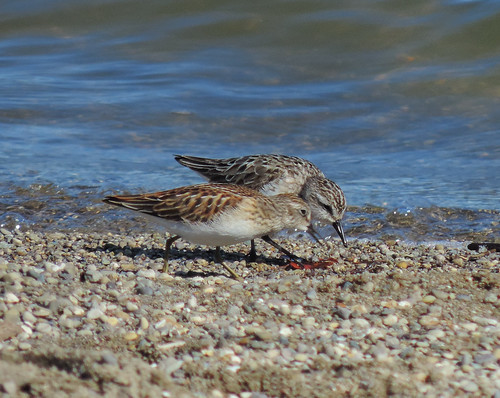
The amount of human activity has been high at the beach at East Fork this year.  I am sure that this has had a lot to do with the lack of shorebirds there.  I have only been able to see least and semipalmated sandpipers there, the second most common shorebirds next to killdeer around these parts.  

Semipalmated and Least Sandpipers

But I am not complaining.  I love shorebirds and could watch them for hours.  I love to stand still on the beach and have them feed next to my shoes.  It is amazing how tiny the peeps are up close.  

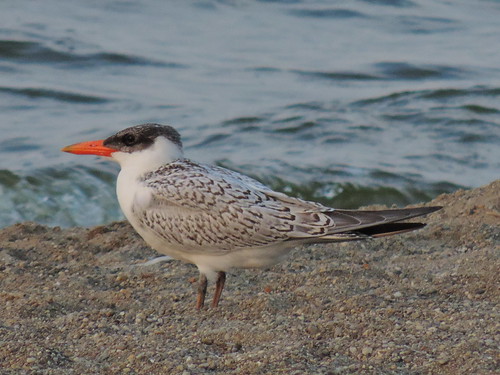
There has also been a spaddering of terns at the beach at East Fork.  While not anything "rare" for say, there has been a few Forster's terns and caspian terns here and there.  Here is a juvenile from the other day.  I think the young ones are neater than the adults.  Constantly making odd begging calls.

Caspian Tern Juvenile

As things are cool east side, things are STILL hot on the west side.  Baird's sandpipers are also being seen on the west side, a bird that I rarely see, and can't remember if I have ever seen one at East Fork.  

And then...

Comes along a sightings post of a rare bird (for here) that would be a lifer for me.  Last year, I have missed the said bird by one day in Boone, Co. Kentucky.  I didn't want wait around on this one.  While quite the drive for me to Aurora, Indiana, this bird is worth the hour plus drive!

The bird?

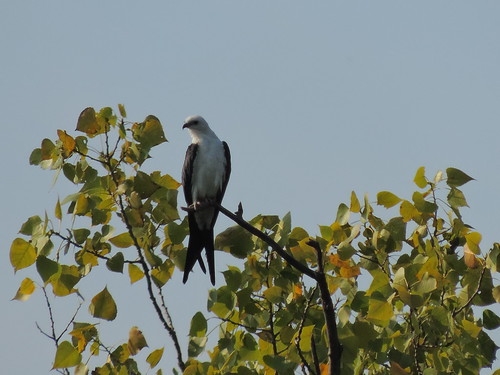
SWALLOW-TAILED KITE!!! - Time to go west!

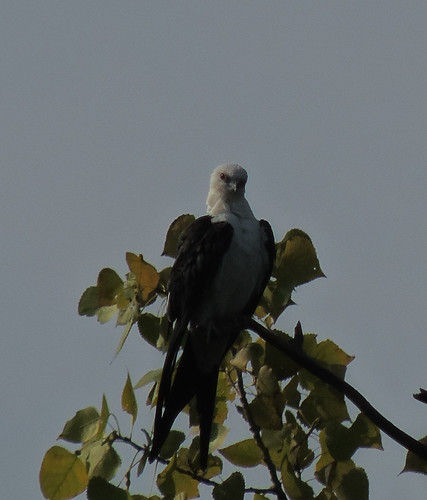
As soon as I came around the bend on the road said to have the kite, I noticed the bird sitting on a dead snag.  Yahoo!  Another birder friend was already observing the bird from his car and exclaimed "are you lost?"  I would have to say yes.  He lives on the west side and was shocked to see me so far out of my area, as I seldom chase.  I had to laugh.

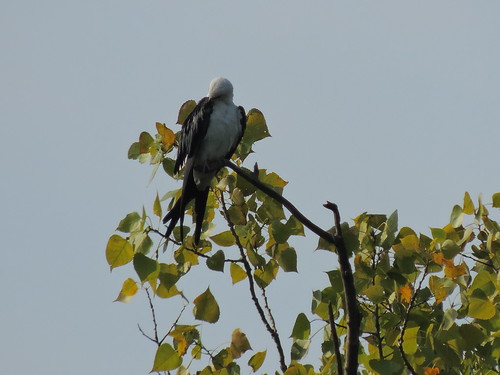
As I got out of the car, I could see the kite preening in a tree in someones backyard.  WOW!  what a bird! Another east side birder friend also shows up.  

Swallow-tailed Kite

Oh Yeah, a life bird!

Swallow-tailed Kite

The bird just sat there, preening for a while.

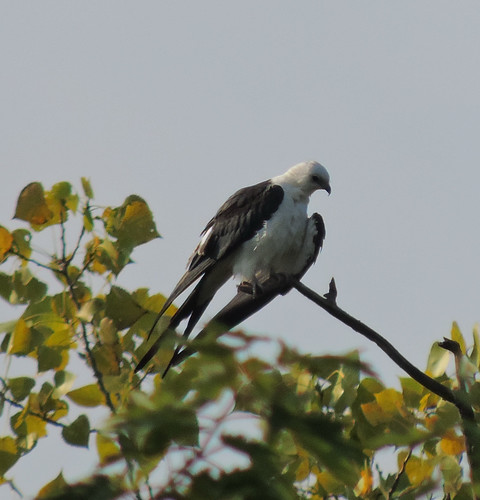
Swallow-tailed Kite

Love that tail, those wings, those red eyes.  Just awesome.  

Swallow-tailed Kite

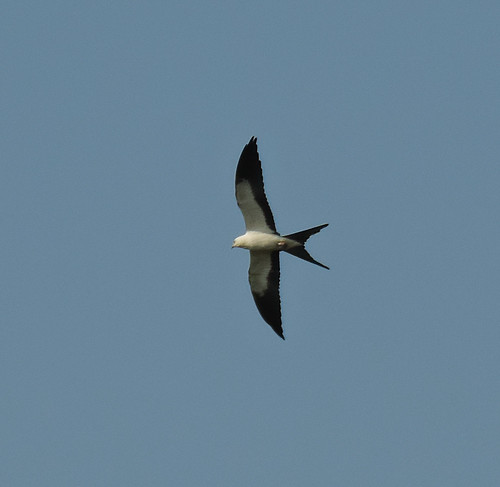
I wanted to see the bird in flight, so I stuck around and just watched it.  Kites sure do like to preen.  Then, the bird started to ruffle its feathers.  I think it is about to take flight!

Swallow-tailed Kite

And off it goes!  Awesome! 

Swallow-tailed Kite

I LOVE this bird.  I want one in my backyard.  Its flight was like it was in slow motion.  It was so graceful, a beautiful bird.  

I love that I bird.  I know that you do to.  Remember, to just get out and see birds and also try to bring newbies and young people out with you.  Have fun!

Wednesday, August 21, 2013

What the... Goose!

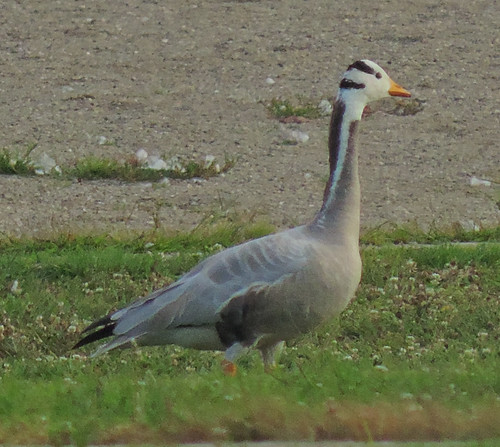
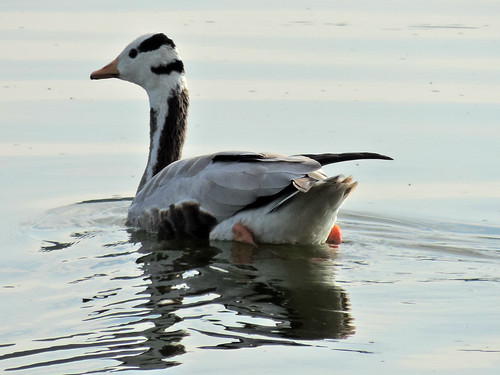
This morning, when I arrived at East Fork, I spotted a large bird flying in from the north while still in my car.  It had white wings and black primary and secondary flight feathers.  I at first thought American White Pelican and as the bird got closer, I thought Snow Goose.  When it landed on the grass by the beach as I was getting out of the car, I was surprised by what I saw.

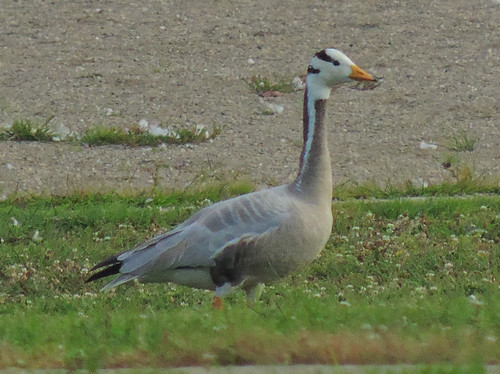
A Bar-headed Goose!

Bar-headed Goose


Bar-headed Goose


I have never seen one before, but was familiar with the species.  This bird is native to Asia and most likely is an escape or a bird that was dumped into the wild.  They have become established in Britain.  The bird can't be added to life lists if you follow the rules, but I am not a lister and really don't get into that kind of thing.  That being said, I do believe that this bird lives a "wild" life.  It was very skittish as compared to the nearby Canada Geese that it later joined up with.

Bar-headed Goose

I could see both halluxes, the back toe or "claw".  Many breeders cut one off.  This bird was not pinioned, as it could fly very well.  A while back, one was found in Covington, KY on the Ohio River.  It was clearly pinioned and had its right hallux chopped off.  Here is a discussion of that bird on Cincybirds:

http://cincinnatibirds.com/message/showthread.php?Thread=2107

A very odd bird to say the least.  It is still a very nice looking bird with a very funny sound.

For more on the bird in the wild, see here:  http://en.wikipedia.org/wiki/Bar-headed_Goose  from Wikipedia.


Monday, July 22, 2013

Underappreciated Sparrows

Many people go out looking for warblers and shorebirds, but not often do birders go out specifically looking for sparrows.  Maybe it is there cryptic coloration or nature, or their LBJ status.  I am guilty myself.

This past spring, while participating in the birdathon, I came to the realization that I have never seen many of the sparrows that are on my life list.  One Sparrow in particular, the Lark Sparrow, was only a fleeting glimpse during a previous birdathon.  I did get looks at Henslow's Sparrow through a scope and close up views of Grasshopper Sparrows during the birdathon this year.  However, due to the fast pace nature of a birdathon, I wasn't able to really look at them close.  So, with recent reports of all of these sparrows actually being seen on the west side of Cincinnati, I decided to set out to see if I could find them.

My primary goal of the trip was to find and get a good look at a Lark Sparrow.  More on that later...

It is a good hour and a half drive to these spots from my house, which is twenty miles or so EAST of Cincinnati.  I had the day off and all day to bird, so I started out before the sun came up.  This is unusual for me any more, as I usually start work at 4am and don't like to get up early on my days off.  I headed for Miami Whitewater Wetlands first, to look for the reported Henslow's Sparrow that is reported to be nesting here.  The humidity and warm temps were already noticeable as the sun was starting to rise.  The place was surprisingly quiet.  I could hear Dickcissels calling from the far fields.  Tons of Common Yellowthroats, but no Sedge Wrens yet.  I proceeded on.

Then I though I heard the very delicate, short call of a Henslow's Sparrow.  No sparrows in sight.  Just far away Dickcissels.  I just kept walking.

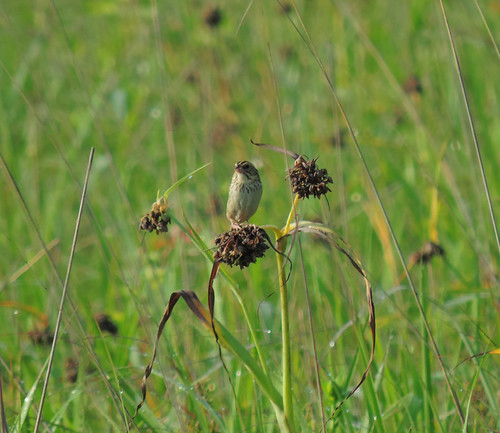
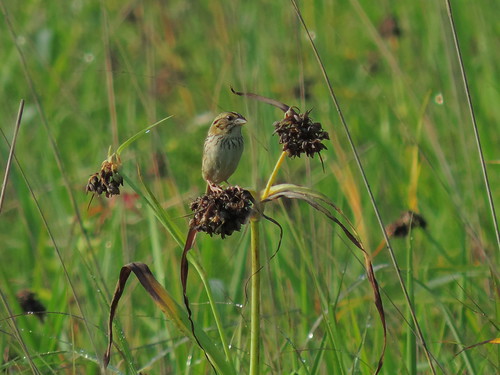
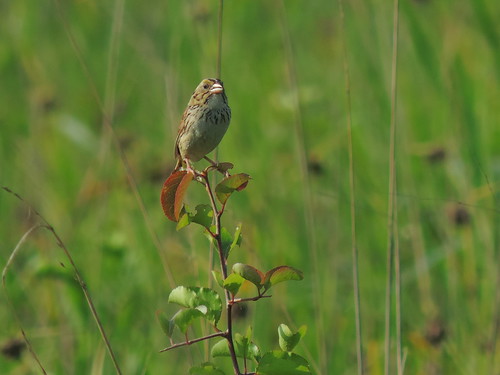
I then spotted a small sparrow just sitting on the side of the bike path.  Not a field Sparrow.  Not a Savannah or Song.  It is a Henslow's Sparrow.  Very Close!

Henslow's Sparrow

The trail winded ahead to where I would be closer to the bird.  I was hoping that it would stay put.  That it did.  It appeared to have no tail, but it was just the way it was sitting.  They look as delicate as their song.

Henslow's Sparrow

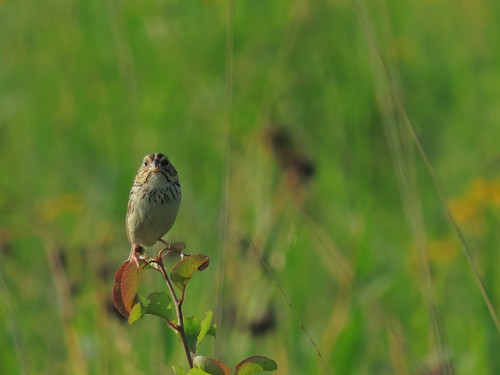
Really a very beautiful sparrow!  This is the first close up of one for me.

Henslow's Sparrow

Henslow's Sparrow

As the sun was up now, it was already getting hot quick.  I was soaked in sweat by 8:00am.  Time to move on.  

After the wetlands, I headed to the Kilby Rd. Gravelpits on the West Side of Cincinnati.  This is also called the Smith Tract, which is owned by the county park system.  I was looking for Grasshopper Sparrows.  
I saw some movement, then a bird.

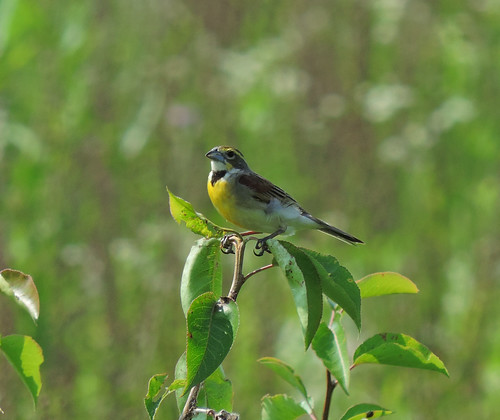
Dickcissel

A Dickcissel.  They were very numerous at all my stops.  While not a sparrow, still cool to see them.

After not hearing any Grasshopper Sparrows, I decided to carry on to my next spot.  I have read reports that they have been found at another location close by, Campbell's Lakes.  On arriving at the lakes, the heat was almost unbearable.  I decided to get out and walk around.  I quickly spotted a Red-headed Woodpecker and Blue Grosbeak.    I could hear no Grasshopper Sparrows.  I continued on walking.  I could hear lots of chips in the grasses that I suspected were the sparrows.  I continued walking.  Just as I was heading to the car, I heard one sing.  It was a ways away from me, so I headed in that direction.  
I then saw a small sparrow like bird fly down into the grass.  A couple of fisherman were walking a trail to one of the back lakes, and flushed a bird.  About that time, two birds came flying past me chasing one another.  One of them landed on a small shrub.  

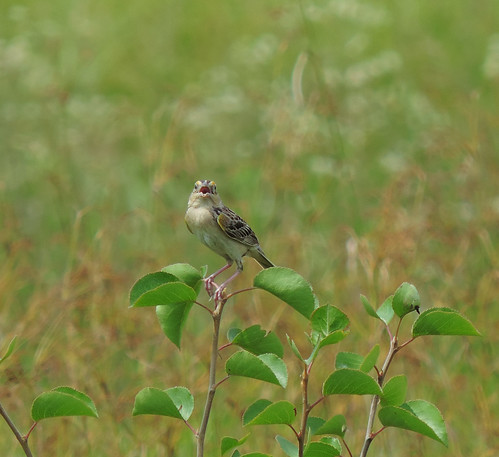
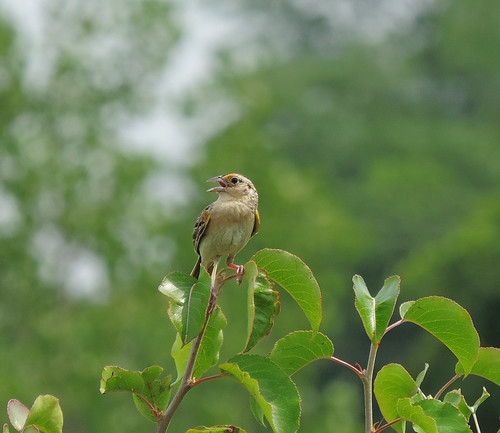
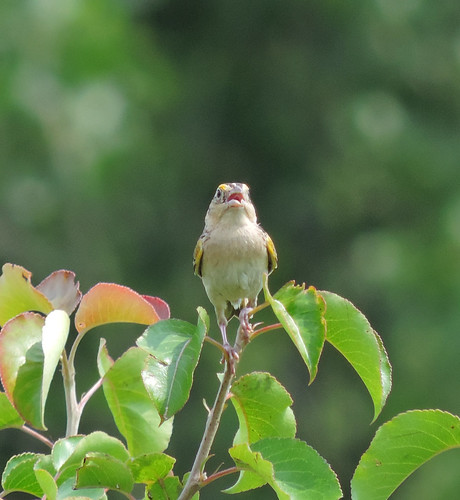
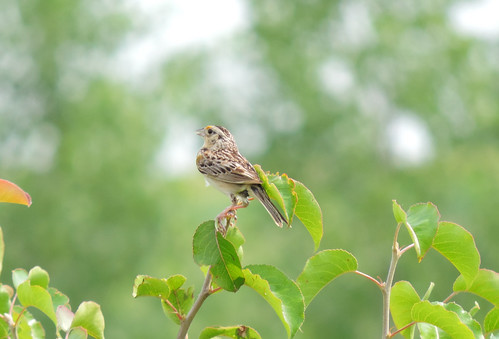
Grasshopper Sparrow

Grasshopper Sparrow!

Again, this is the closest I have seen one.  It is really a sticking little bird.  Very spunky too.

Grasshopper Sparrow

Grasshopper Sparrow

I really like the yellow shoulders.  The back of the bird was just as cool.  It was a pattern that would definitely make it hard to see in walking in the grasses.  Very pretty, the back of a Grasshopper Sparrow.

Grasshopper Sparrow

Close up of the neck.  I found the pattern on the neck to be very cool!

Grasshopper Sparrow

As the heat was now unbearable, I decided to head east towards home.  The spot that is most reliable for Lark Sparrow was on the way home, so I decided to go there next.  The spot were they are usually seen one wouldn't think to be a destination for birders.  It is a semi - abandoned condo complex that has foundations that were never finished or developed.  As I approached the condo complex, I noticed a bird in the middle of the road.  It was just pacing back and forth.  I stopped the car, to find that it was indeed a young Lark Sparrow!  It still had down on its head.  I fumbled to get my camera.  I then happened to relize that I was parked in the middle of a highway and glanced up at my rear view mirror only to find a cement truck barreling down on me.  Yike!  I quickly pulled into the complex and parked.  When I got out of the car, the Lark Sparrow flew into the tree line.  Dang!  The bird never re-showed.  One for next time I guess.
Friday, July 12, 2013

Cool news!

There was a request for the need of certain bird photos for an exhibit posted to the Ohio Birds email list not too long back.  The exhibit would be about Alexander Wilson and would be at the Paisley Museum in Scotland.  I looked and the list of photos that they still needed for their exhibit and found that I had one of a those - the Kentucky Warbler!

This is one of my favorite photos that I have taken.  I just got very lucky.  Here is the photo that was used in the exhibit:

                   Kentucky Warbler

It was a bird that was discovered by Alexander Wilson himself, the Kentucky Warbler.

Here is a picture of the pictures hanging in the exhibit in Scotland with other pics of birds by another photographer Steve Jones.  My pic is the 2nd from the right in the 2nd row down.

If you can't go to Scotland and see the exhibit (I can't, but wish I could!) , it is also online here 


Here is a direct link to my pic - Kentucky Warbler

Special thanks to Edward Lux and Dr. Jed Burtt for this opportunity.  Also want to thank photographer Steve Jones for notifying me about the online exhibit.

Saturday, July 06, 2013

Willet ever stop raining?

It has rained about every day for the last two weeks here in SW Ohio.  Not all day every day, but at least enough to make it hard for me to be able to get out birding.  That being said, when I saw a slight glimpse of the sun this evening, I had to grab my birding gear and head out.

I didn't have much daylight left, but there was enough light that I could still take identifiable pictures if I needed to.  With all the rain, I figured the beach at East Fork would be fairly empty of people and I was right.  There was a vehicle jamming music out on the sand of the the beach, which is not allowed.  They quickly left after I got out of the car.  I then noticed some larger shorebirds foraging in the grass not far from me.

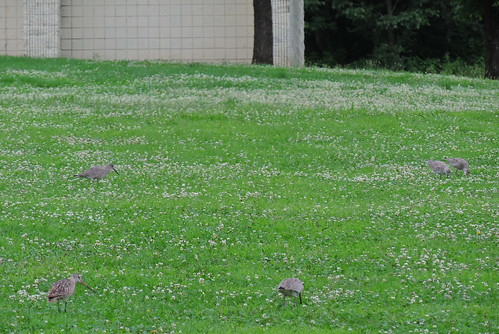
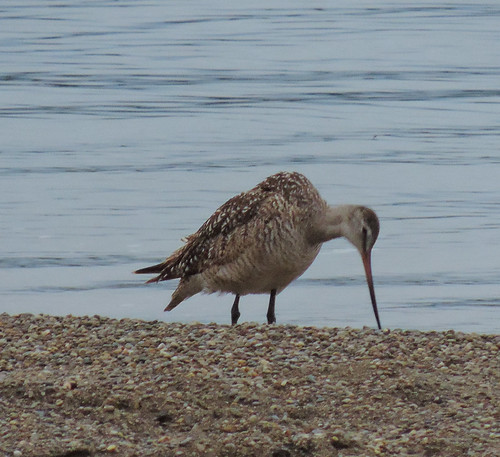
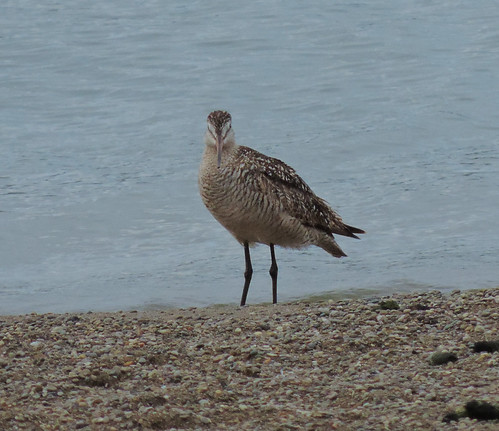
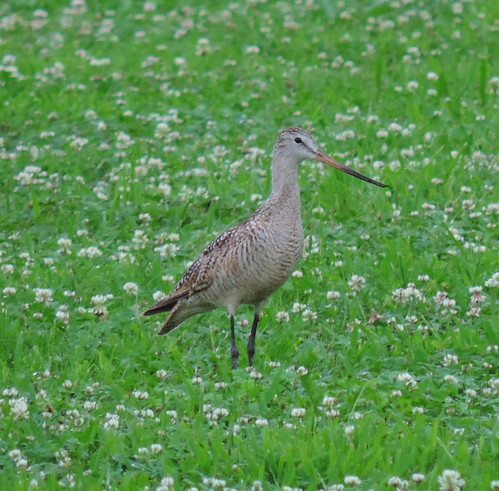
The bird closest to me appeared bigger than the ones around it.  I could not see the head or bill, so I was initially confused..  I looked at the other birds and quickly IDed them as Willets.  That is a good bird in Cincinnati, but what is this other bird that is bigger?  I needed to get a little closer.  Then the bird lifted its head.  A Godwit!  Now what kind?

It is a good shorebirding day in Ohio when you can get out of your car and see this:

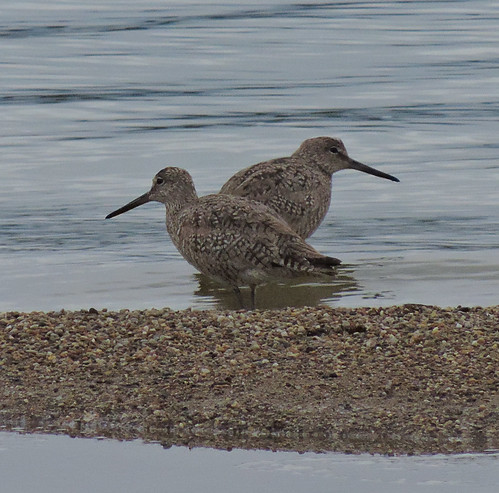
4 Willet, 1 Marbled Godwit

Very odd habitat for both birds, but I have see a lot of good shorebirds in the grass at the beach at East Fork.

A couple who was out walking saw me looking at the birds and asked some questions about them.  It was nice to show them the birds.  They seemed somewhat interested.  Very cool.  

Marbled Godwit

Marbled Godwit

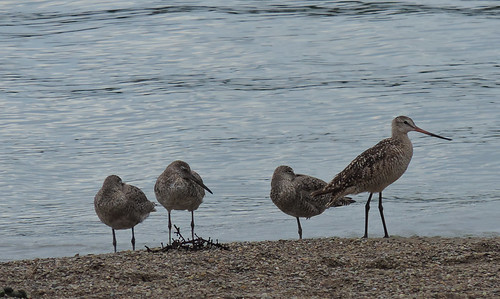
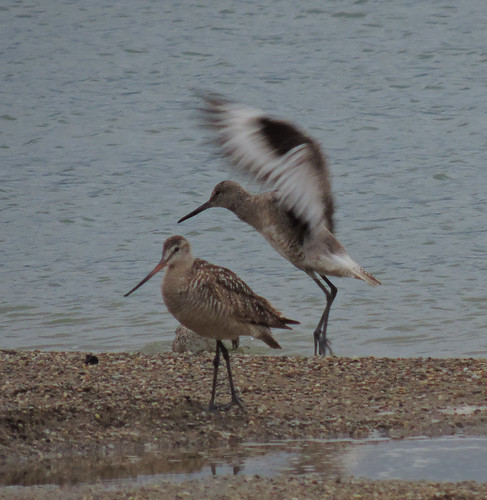
The birds spooked and flew to the water's edge on the beach.  I love to watch Willets in flight.  The Godwit then proved that it was a MARBLED GODWIT when it flew.  A very pretty rufous light brown cream color to the wings and underwings.  It also vocalized.  There was not enough light left for an in flight shot.

4 Willet and Marbled Godwit

Willet with Marbled Godwit

I have only seen one Marbled Godwit ever, and it was here at the south beach at East Fork in Sept. of 2007.  There are only 10 other records of this bird in the database on the Birding in Cincinnati website.
None of these records are from June, July or August.  Pretty early and cool!

It was a funny bird to watch.  It was catching worms in the grass and then preening on the beach.  

Marbled Godwit

Marbled Godwit

Very funny postures as it fed.

Marbled Godwit

The shorebird stare down never fails me!

Marbled Godwit

Marbled Godwit

And who could forget those lovely Willet wings!

Willet and Marbled Godwit

Willet and Marbled Godwit

Willet

Shorebirding season off to a good start.  Bring on the birds!

Monday, June 24, 2013

Why I bird...

I haven't been able to get out as much as I had hoped during the end of May/early June, as I have recently had two cameras and a spotting scope stolen from my home.  This had left me without any camera for a short time.  I rely  on my camera as my secondary (only to memories) way to capture my birding experiences.  However, it is my primary and best way to share them with others.

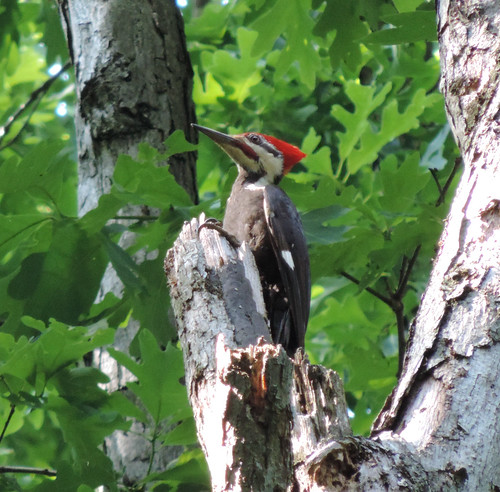
So, it was to be expected that I would purchase another camera and return to my birding norm.  Although, it was an unexpected and very depressing financial blow.  So, to get things off my mind, I decided to go for a long walk in some very deep woods that I have never been in before.  The canopy was so thick in spots, that  it seemed as if it was twilight when in fact it was close to noon.  The woods was very quite as it was kind of warm out.  As I proceeded to walk deeper in the woods, I could hear Pileated Woodpeckers chattering like mad.  I figured that they must have a nest just outside of the park property.  The leaves were so thick, that I could not see much ahead of me.  Then, out of nowhere, the pair of Pileated Woodpeckers started flying towards me.  Then a loud unknown squawk was heard, as a Cooper's Hawk came crashing down almost on top of my head.  The Pileateds were in hot pursuit.  The hawk hit the ground, and then saw me and panicked.  Then the woods came alive in bird song and alarm notes.  I was quickly reminded of why I bird, as I forgot about all the worries I had from the robbery.

Everything happened so quick, pictures were impossible to obtain of the encounter.  Here is the male Pileated, just seconds after it all.

Pileated Woodpecker

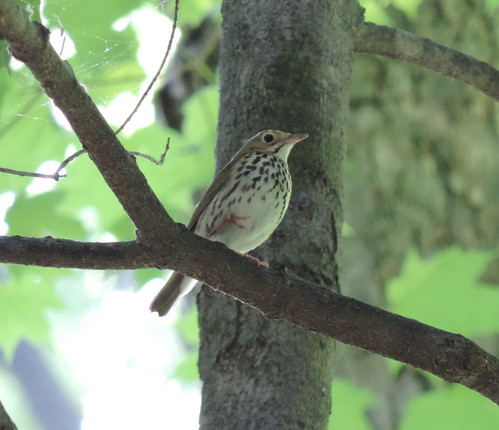
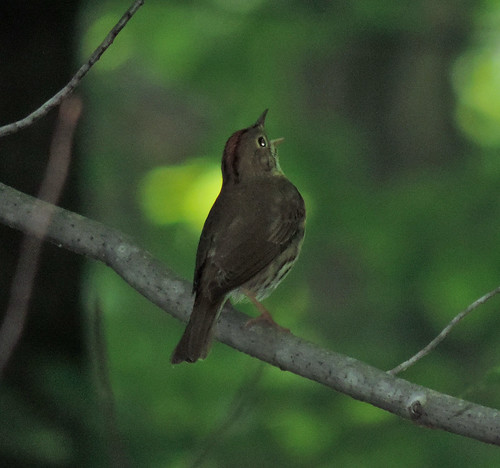
The rawkus agitated a pair of Ovenbirds that were apparently nesting in the area that the hawk came down in.  The male began to sing and the female was rolling on the ground flailing her wings.  It was very dark down under the canopy.

Ovenbird


Ovenbird

Ovenbird

After my long walk in the woods, I decided to check the beach since it was still early for the large amounts of swimmers of the summer.  

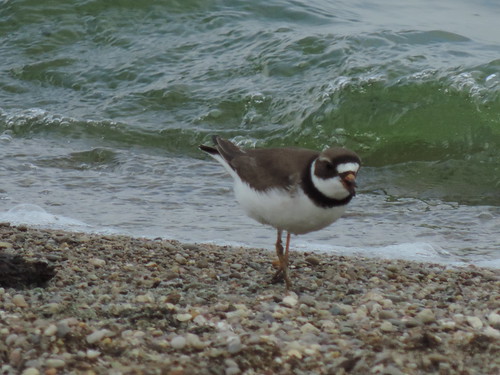
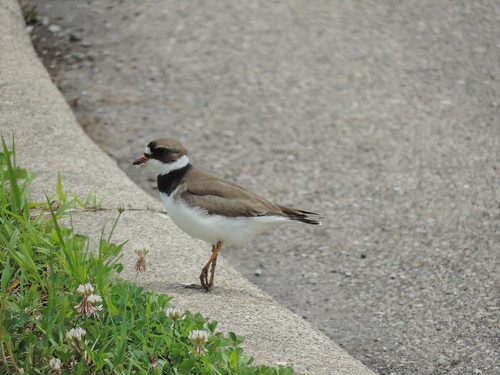
The only bird on the beach was this Semipalmated Plover.  I would of not spotted it, but it was being chased by a little girl.  It was also calling, which I have never heard before.  It was like it was yelling HELP!

Help!

I quickly found out why I think it was calling.  It was hopping on one leg.  The bird finally had enough of the little girl's chasing and flew away.  As I was walking towards my car, I noticed the bird was standing almost beneath it.  I then noticed that the bird obviously had an injured leg.  

Semipalmated Plover

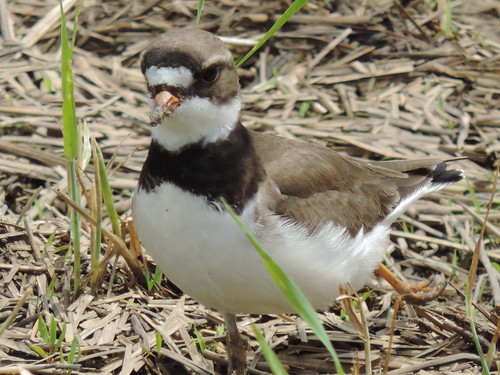
I then thought about my problems in relation to this bird.  There is no way to tell where or when this bird injured its leg, but it most likely had to migrate with it in that condition.  For it to be able to avoid predators and keep on flying is just amazing.  This is why I bird.

Semipalmated Plover

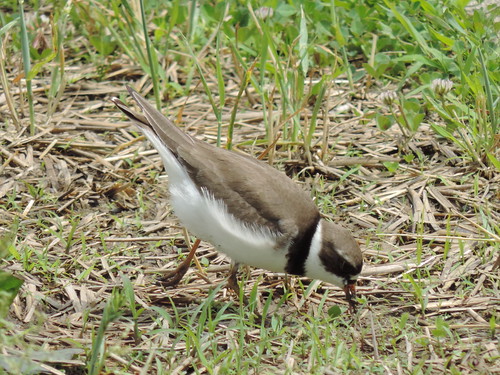
The bird was actively feeding, so I think it will survive to its breeding grounds.   

Semipalmated Plover

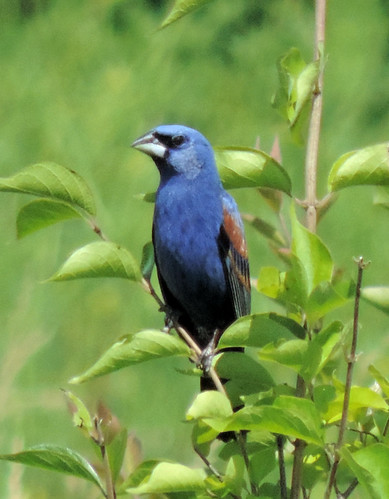
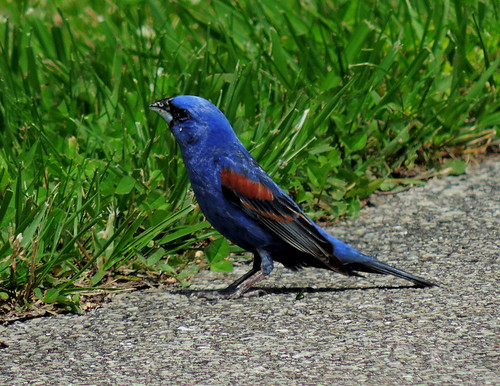
There has been an explosion of Blue Grosbeaks it seems at East Fork.  I have seen 4 males and one female, with all 4 males quite a distance from the next.  Recently, I was able to obtain a quick shot of one.

Blue Grosbeak

Since the bird was at quite a distance and in harsh light I returned the next day to get this shot out the car window.

Male Blue Grosbeak

Such a beautiful bird! I could watch them all day I think.  To see such gorgeous birds as this, this is why I bird.

As always, take time out to enjoy nature and try to take a child out birding as well.